
Ayodhya Ram Mandir
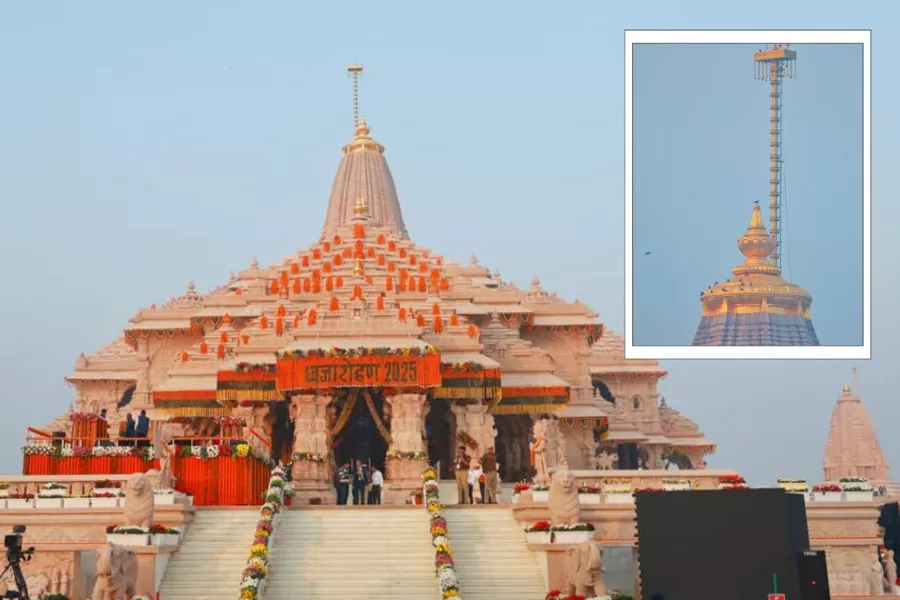
Hindus from across India visit the Ayodhya Ram Mandir to worship Lord Rama. People believe Lord Rama was born at this exact spot. The temple stands tall on 4 hectares of land. The full complex covers 23 hectares and includes many buildings. You will find a lecture hall, prayer room, school, museum, and cafeteria here. Around 70,000 people can visit the temple at the same time.
History
The temple stands in Ayodhya, Uttar Pradesh. In the 16th century, Babar built Babri Masjid at this location. Hindus believed a temple stood here first. People demolished Babri Masjid in 1992. The Supreme Court of India made an important decision in 2019. The court gave this land to Hindus to build a temple. Muslims received land in Dhannipur to build a mosque. The Archaeological Survey of India found remains of a non-Islamic building under the old Babri Masjid.
Prana Pratishtha
Prime Minister Narendra Modi performed the Bhumi Pujan on 5 August 2020. This ceremony started the temple construction. The temple opened on 22 January 2024. Prime Minister Modi performed the Prana Pratishtha ritual on this day. The Shri Ram Janmabhoomi Teerth Kshetra organized this grand ceremony. The Prime Minister followed strict rules for 11 days before the ceremony. He drank only coconut water and ate fruits. He slept on the floor every night. The main ceremony took place between 12:15 pm and 12:45 pm. He asked everyone in India to light diyas at home and celebrate like Diwali.
Ram Mandir Flag (Dharm Dhwaja)
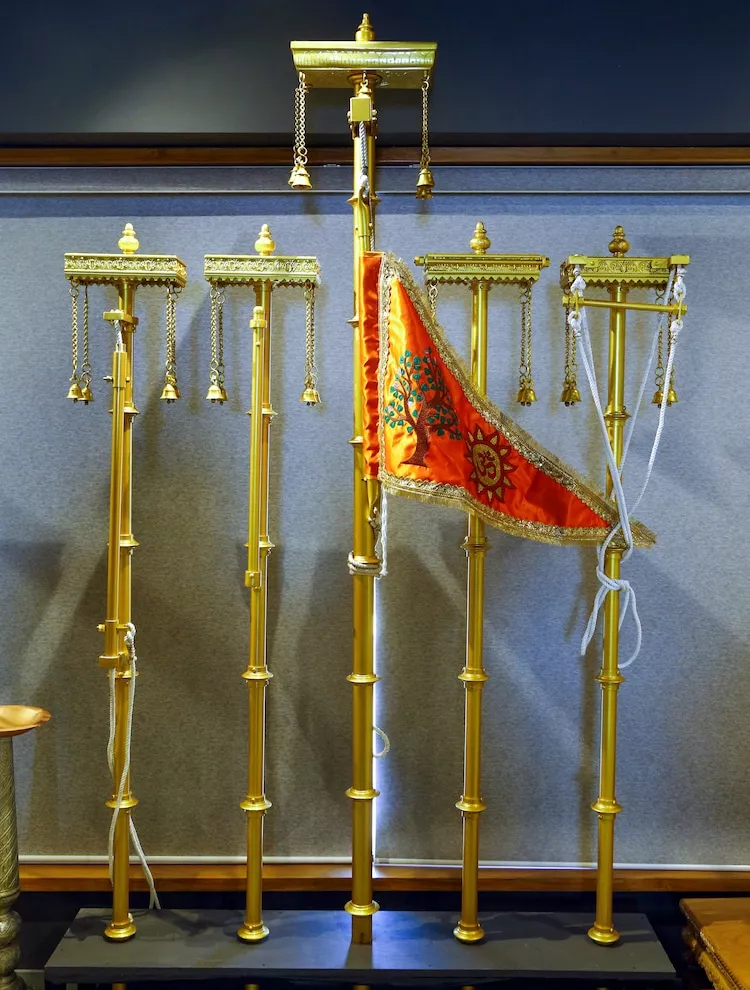
Prime Minister Narendra Modi performed the Dhwajarohan ceremony on 25 November 2025. The Ayodhya Ram Mandir flag displays a beautiful saffron color. Three sacred symbols appear on this flag – ‘Om’, ‘Sun’, and ‘Kovidar Tree’. Artists hand-embroidered these symbols using golden threads. This flag marks the complete construction of the temple and shows the victory of dharma.
Main Features and Symbols of the Flag
Color and Size: The flag forms a right-angled triangle shape in saffron color. It measures 20 feet in length and 10 feet in height. Makers combined special parachute-grade fabric with silk threads. This special fabric helps the flag survive harsh weather like strong sunlight, heavy rain, and powerful winds.
Symbols and Their Meaning:
- Sun: This symbol represents Lord Rama’s ‘Suryavansh’ lineage. The sun stands for honesty, brilliance, and dharma.
- Om: This symbol sits in the center of the flag. It shows endless cosmic energy and the unity of divinity.
- Kovidar Tree: This ancient royal symbol of Ayodhya comes from Valmiki Ramayana. Sage Kashyap created this symbol. It represents victory, prosperity, and the ideals of ‘Ram Rajya’.
Installation: The flag flies on a 42-foot tall flagpole at the top of the temple’s main 161-foot high shikhara. The flagpole has a 360-degree rotating mechanism. This allows the flag to turn according to wind direction.
Importance: Temple officials explain that the ‘Dhwajarohan’ ceremony announces the formal completion of temple construction. It marks the spiritual activation of the site. This ceremony sends a message to devotees worldwide that the grand temple now stands fully established.
Deity
The temple honors the birthplace of Lord Rama. The main idol shows Lord Rama as a small child. People know Lord Rama as an avatar of Lord Vishnu. Tulsidas called the baby form of Rama as Ram Lalla. Local Hindus call the idol Ram Lalla Virajman. Arun Yogiraj created this beautiful idol of Balak Ram. Two tailors, Bhagwat Prasad and Shankar Lal, made the first dress for Ram Lalla during Bhumi Pujan. Their family has made clothes for Lord Rama’s idol for four generations.
Architecture
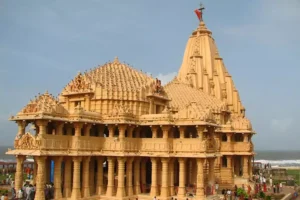
The Sompura family from Allahabad designed the original temple in 1988. This family has designed over 100 temples worldwide for 15 generations. They also designed the famous Somnath Temple. The current temple measures 250 feet wide, 380 feet long, and 161 feet high. This temple ranks as the third largest Hindu temple in the world. The temple follows the Maru-Gurjara style of Nagara architecture, common in North India. The temple has three floors and sits on a raised platform. Five mandapas surround the octagonal garbhagriha in the center and along the entrance. Shri Ram Darbar occupies the first floor with five halls: Nritya Mandap, Rang Mandap, Kirtan Mandap, Sabha Mandap, and Prarthana Mandap. Each mandap displays beautiful shikharas on top. Hindu gods and goddesses appear throughout the complex. Separate temples honor Surya, Ganesha, Vishnu, Brahma, Shiva, and Bhagwati. The Hanuman temple sits on the southern side. The Annapurna temple stands on the northern side. The complex contains 366 columns. Each column displays 16 statues showing different forms of Shiva, 12 forms of Goddess Saraswati, the Chausath Yoginis, and the 10 Dashavataras.
Construction
Builders used 6,00,000 cubic feet of sandstone from Baansi in Rajasthan. No iron or steel appears in the temple structure. Workers used 10,000 copper plates to join the stone blocks together. Thailand sent soil to Ram Janmabhoomi as a special gift for the temple construction.
Facilities and Amenities
Visitors can use ramps and lifts to reach different areas. The temple provides special help for elderly people and those with disabilities. The pilgrim facility center serves 25,000 people. Medical help and locker services are available for visitors. The builders cared about nature while making this temple. Green spaces cover 70% of the 70-acre area. The complex saves water through special methods.
Ram Mandir Ayodhya Timings
Check the temple timings before you visit. The darshan and aarti times differ from each other.
Ayodhya temple opening and closing timings: Darshan starts at 07:00 am and continues until 11:30 am. After a break, darshan resumes at 02:00 pm and goes on till 07:00 pm.
The temple performs aarti three times every day. Shringar or Jagaran Aarti happens at 06:30 am. Bhog Aarti takes place at 12 noon. Sandhya Aarti occurs at 07:30 pm. You need a pass to attend these aarti ceremonies.
Ayodhya Ram Mandir Guidelines for Devotees
- The temple welcomes devotees from 6:30 am to 9:30 pm.
- Your complete visit from entry to exit takes about 60 to 75 minutes. The process runs smoothly and quickly.
- Leave your mobile phones, shoes, bags, and purses outside. This saves your time.
- Do not bring flowers, garlands, or prasad to the temple.
- You need an entry pass for three aartis: Mangala Aarti at 4 am, Shringar Aarti at 6:15 am, and Shayan Aarti at 10 pm. Other aartis do not need passes.
- Get your free entry pass from the Shri Ram Janmabhoomi Teerth Kshetra Trust website. No charges apply.
- The pass requires your name, age, Aadhar card, mobile number, and city.
- No special darshan exists through payment or special passes. Anyone who asks for money tries to cheat you. The temple management has no connection to paid darshan.
- Wheelchairs help elderly and disabled visitors. Use these wheelchairs only inside the temple premises. No rental fee applies, but give a small amount to the young helper pushing the wheelchair.
How to Book a Ram Mandir Aarti Pass?
Follow these simple steps to get your aarti pass:
- Visit the official Shri Ram Janmabhoomi Teerth Kshetra website.
- Enter your phone number and login using the OTP.
- Click on the Aarti section on the main page.
- Select your preferred date and aarti type.
- Fill in your details including name, address, and photograph.
- Collect your passes from the temple counter on your visit day.
You must have a pass to watch the aarti at Ayodhya Ram Mandir.
How to Reach Ayodhya Ram Temple?
Good roads, trains, and flights connect Ayodhya Ram Temple to major cities. The temple sits 12 kilometers from Maharishi Valmiki International Airport. This airport serves both Ayodhya and Faizabad. Direct flights link the airport to big cities and many smaller towns across India.
How to Reach Ayodhya Temple by Train?
Ayodhya Dham Junction Railway Station stands closest to Ram Mandir. This station in Dharmakata sits less than 2 kilometers southeast of the temple and 1.5 kilometers southwest of the city center. Faizabad Junction Railway Station (also known as Ayodhya Cantt Railway Station) serves as the second option. It stands about 11.5 kilometers from Ram Mandir. Hire a taxi from the station to reach Ram Janmabhoomi in roughly 30 minutes. Electric auto-rickshaws and taxis run regularly from the railway station. Uber operates electric auto-rickshaws throughout Ayodhya city. Book your ride through the Uber app.
How to Reach Ayodhya Ram Mandir by Flight?
Maharshi Valmiki International Airport serves as the nearest airport. The airport lies about 12 kilometers from Ram Mandir. Book a pre-paid taxi at the car rental booth in the arrival hall. The drive to downtown Ayodhya takes 30 to 40 minutes. Pre-paid cabs wait at the airport ready to take you to Ram Mandir.
How to Reach Ayodhya Ram Mandir by Road?
State and national highways link Ayodhya to other major cities in Uttar Pradesh. Uttar Pradesh State Road Transport Corporation (UPSRTC) runs government buses on these routes. Private bus companies also operate comfortable Volvo and AC coaches between important cities and Ayodhya. Many travelers drive from Allahabad, which sits 180 kilometers away. Varanasi lies 225 kilometers from Ayodhya. Ayodhya Dham Bus station stands 9 kilometers from Ram Mandir. Take an e-rickshaw or Uber electronic auto-rickshaw from the bus station to reach the temple. Regular cabs also run on this route.
Hotels near Shri Ram Janmabhoomi Temple Ayodhya
Many hotels operate near Ayodhya Temple. Visit Google or open the Map to find good options. Click on Hotels on the homepage. Type Ayodhya as your destination. Add your check-in and check-out dates. You will see many hotels near Ayodhya Ram Mandir. Taraji Resort offers a Yatra Clean Pass promise, free cancellation, and free wi-fi. Cygnett Collection KK Hotels provides the best facilities near Ram Mandir. This hotel has a multi-cuisine restaurant, a bar, and a swimming pool. AP House Hotel suits budget travelers. This economy hotel keeps clean rooms with modern comforts.
Places to Visit Near Ayodhya Temple
The Ram Mandir forms the heart of your Ayodhya visit. Many other ancient temples fill the city with stories from Ramayana. Plan to stay for two nights to cover all the important spiritual sites. Most places connect to the great epic of Ramayana.
Hanuman Garhi
This 10th century temple dedicated to Lord Hanuman sits on a hilltop. People consider this temple as important as Ram Mandir. Stories say Lord Hanuman lived here and protected Ayodhya. Climb 76 steps to reach this old temple. The view shows beautiful Ayodhya city and the flowing Sarayu River. Many devotees come during Diwali and Ram Navami to pray to Lord Hanuman, who represents strength, speed, and loyalty.
Nageshwarnath Temple
This temple sits next to Theri Bazaar in Ayodhya. The temple worships Nageshwarnath, a form of Lord Shiva. Kush, son of Lord Rama, built this shrine in 750 AD. Naval Rai, a minister to Safar Jung, repaired the temple in 1750. Stories tell that Kush lost his armlet while bathing. A Naga Kanya who loved Lord Shiva found it. She fell in love with Kush after they met. Kush built this temple to honor her devotion to Lord Nageshwarnath. Huge crowds arrive on Mahashivaratri. Hindu pilgrims from Uttar Pradesh and across India come to offer milk and flowers to the idol.
Kanak Bhawan
This charming temple honors Lord Rama and Sita. The temple stands northeast of Ram Mandir. People call it Sone-ka-Ghar, which means House of Gold. Built in 1891, this temple gets its name because the main idols wear gold crowns and sit under a silver roof. Stories say the idols were gifts to Rama and Sita from Kaikeyi, Rama’s stepmother. Kings Vikramaditya and Vrish Bhanu Kunwari restored the temple. The temple shows Bundela school architecture.
Gulab Bari
The name means Garden of Roses. This place sits in Vaidehi Nagar. Nawab Shuja-ud-Daula, the third Nawab of Faizabad (Awadh), rests here in his tomb. His parents’ tombs also stand here. This 18th century building displays Nawabi architectural style. Beautiful rose gardens, green lawns, and fountains create a peaceful atmosphere. The Ancient Monuments and Archaeological Site and Remains Act protects this national heritage site. The Nawab built Gulab Bari himself. Bahu Begum’s tomb and her house Moti Mahal also stand here. The Charbagh Garden lies at the center with two-storied tombs and colorful roses at both entrances.
Treta ke Thakur
This temple sits along Naya Ghat of Ayodhya. The temple houses idols of Lord Rama, Sita, Lakshman, Hanuman, Bharat, and Sugreev. Artists carved each statue from single black sandstone blocks. King Kullu built this 300-year-old temple. People believe Lord Rama performed the Ashwamedha Yagna at this exact spot. Maratha queen Ahilyabai Holkar renovated the temple in the 1700s. The temple opens only once a year on Ekadashi. This day falls on the 11th day of Shukla Paksha in the Karthika month according to the Hindu calendar. Thousands of pilgrims visit on this day for colorful celebrations and ancient rituals.
Sita ki Rasoi
This ancient kitchen stands northwest of Ram Janmabhoomi in the Rajkot area of Ayodhya. Stories say Sita Maa cooked in this kitchen. The builders placed it close to Ram Janmabhoomi. Old cooking utensils from that time remain here. Two kitchens exist on the site. Sita ki Rasoi sits in the basement. A temple on the other side shows beautifully decorated idols of Lord Rama, Lakshman, Bharat, Shatrughan, and their wives Sita, Urmila, Mandavi, and Srutakirti. People worship Sita as Annapurna, the goddess of food. The temple continues the tradition of serving free food to everyone. Visitors can donate money for this charity.
Choti Chawni
People also call this place Valmiki Bhawan or Maniramdas Chawni. White marble covers this stunning structure completely. This ancient area in central Ayodhya shows the culture and heritage of the city. Old buildings fill the Chawni, each with special stories. Religious sites include both temples and mosques, showing Ayodhya’s secular nature. Walk through narrow dusty lanes to discover traditional food shops, street vendors, and small cafes. Look for famous monuments like Ram ka Tullah, Tulsi Smarak Bhawan, and Karsevakpuram. Islamic structures stand beside Hindu buildings and old-world architecture, revealing Ayodhya’s rich history and culture.
Ram Katha Park
This famous park in downtown Ayodhya features open-air theaters and well-kept lawns. The venue hosts cultural shows, devotional programs, story recitals, dance performances, poetry sessions, and religious events. Children play in the park during evenings. The breezy amphitheater always has something happening.
Best Time to Visit Ram Mandir
Visit Ayodhya during autumn and winter months. These months offer the perfect weather for Ram Mandir visits. The heat and humidity of monsoon fade away by this time. Pleasant weather during the day makes sightseeing enjoyable. Plan your trip during festivals like Diwali, Dussehra, or Ram Navami. All these festivals happen in autumn and winter. The entire city glows with lights and earthen lamps burn everywhere. Colorful rituals fill the day at Ram Mandir. The evening aarti creates a magical experience. Holi and Ram Navami bring grand celebrations to Ayodhya Temple. Visit during these times to experience the old-world charm and vibrant festivities. Diwali brings the most visitors to Ram Mandir. Book your hotels and flights early before prices rise.