
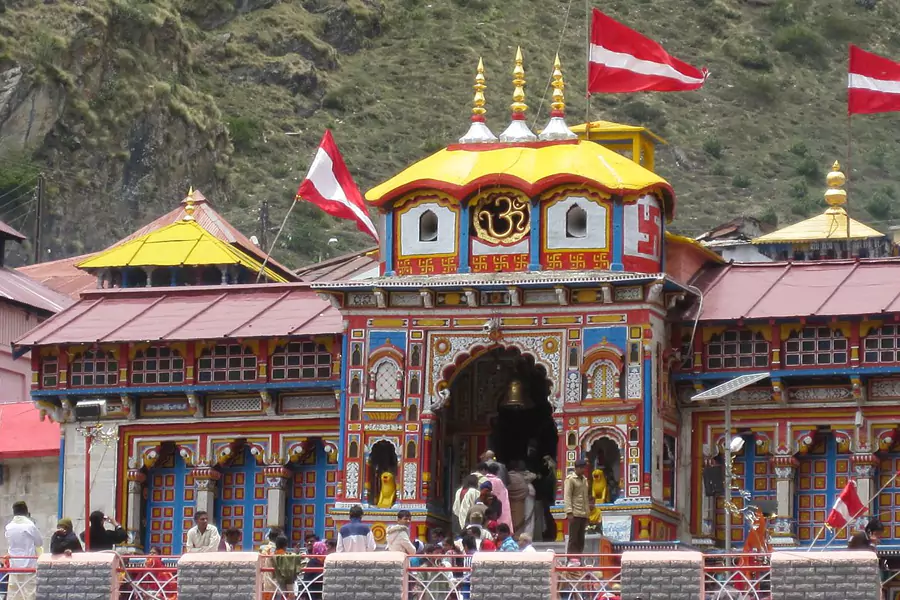
Badrinath Temple
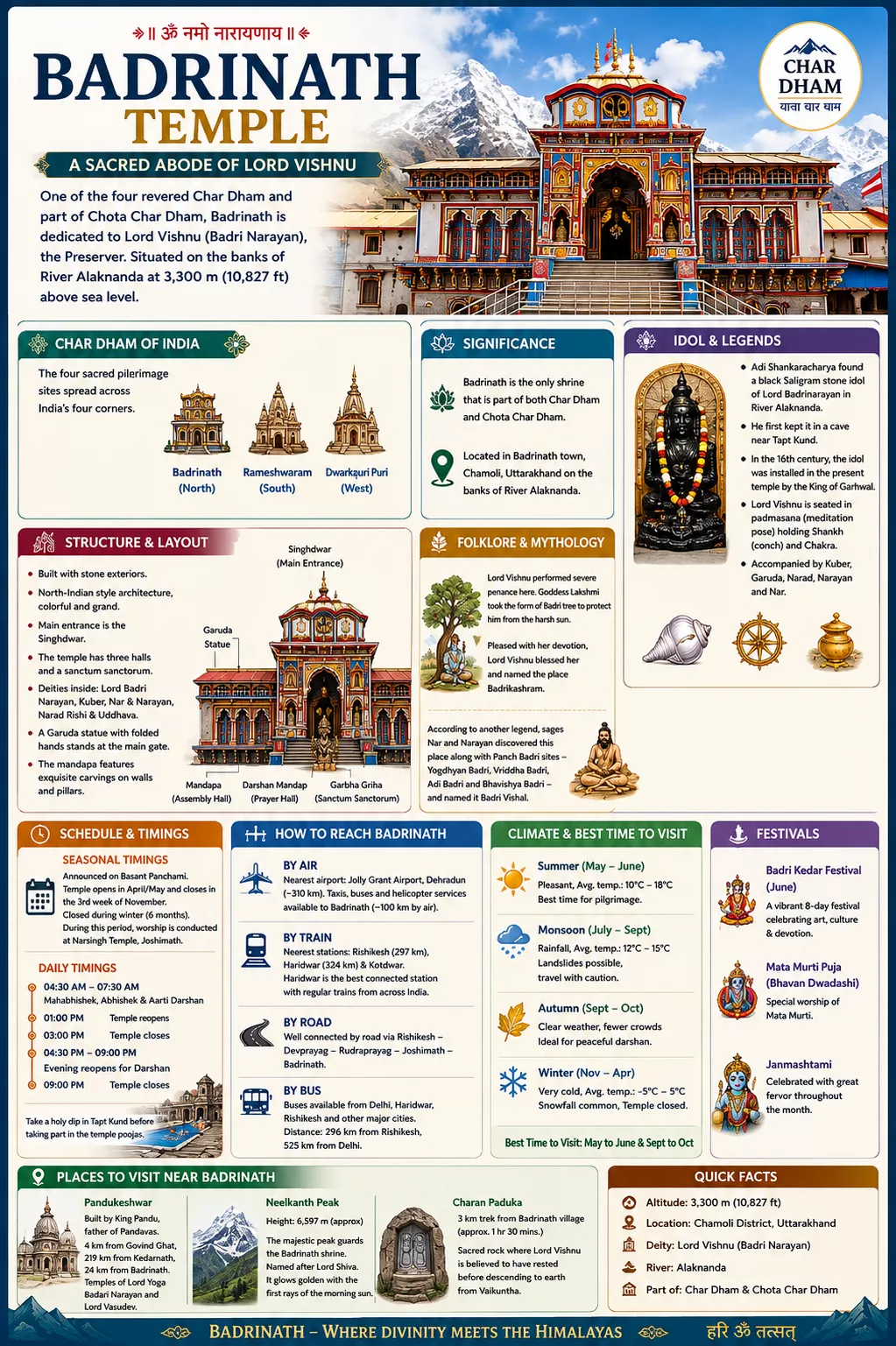
Badrinath Dham is one of the holiest pilgrimage destinations in India and holds a special place in Hindu tradition. It is one of the four sacred shrines of the Char Dham Yatra and is also included in the Chota Char Dham pilgrimage of Uttarakhand. Situated on the banks of the Alaknanda River at an altitude of about 3,300 metres (10,827 feet) above sea level, the temple is dedicated to Lord Vishnu, who is worshipped here as Badri Narayan. Every year, thousands of devotees visit this sacred shrine to seek blessings and experience its peaceful spiritual atmosphere.
Among the four Char Dham pilgrimage sites of India, Badrinath is the only shrine that is also part of the Chota Char Dham circuit. The four sacred destinations are Badrinath in the north, Rameswaram in the south, Dwarka in the west, and Jagannath Puri in the east. Because of this unique position, Badrinath holds great religious importance for devotees of Lord Vishnu.
Located in the Chamoli district of Uttarakhand, Badrinath Temple houses the idol of Lord Badri Narayan. According to the Bhagavata Purana, Lord Vishnu performed intense meditation at this sacred place in the form of Nara and Narayana for the welfare of humanity. Since then, Badrinath has remained one of the most important Vaishnav pilgrimage sites in the country.
Structure Design and Layout of the Badri Vishal Temple
The Badrinath Temple is built in the traditional North Indian style and stands as a remarkable example of Himalayan temple architecture. Its colourful exterior, beautifully decorated entrance, and distinctive Singhdwar immediately attract the attention of pilgrims. The temple is divided into three main sections: the Garbha Griha, Darshan Mandap, and Sabha Mandap, each serving a specific purpose during worship.
The sanctum houses the sacred idol of Lord Badri Narayan, along with the idols of Kubera, Nar, Narayana, Narada, and Uddhava. Facing the main shrine is the idol of Garuda, the divine vehicle of Lord Vishnu, shown with folded hands in a posture of devotion. The walls and pillars of the mandap feature beautiful carvings that reflect the artistic and spiritual heritage of the temple.
Statue of Lord Badri in the Temple
According to tradition, Jagadguru Adi Shankaracharya recovered the black Saligram idol of Lord Badri Narayan from the Alaknanda River. He first installed the idol near the sacred Tapt Kund, and it was later shifted to the present temple by the rulers of Garhwal.
The idol is carved from black Saligram stone and depicts Lord Vishnu seated in the meditative Padmasana posture. Unlike many temples where the deity is shown holding different divine weapons prominently, the idol at Badrinath reflects peace, meditation, and spiritual wisdom. Along with the main deity, idols of Kubera, Garuda, Narada, Nar, and Narayana are also worshipped inside the sanctum, making the temple spiritually significant for Vaishnav devotees.
Folk and Mythology Related to Badrinath Temple
According to Hindu belief, Lord Vishnu chose this peaceful Himalayan valley for deep meditation. While he remained absorbed in penance, Goddess Lakshmi took the form of a Badri tree to shield him from the harsh weather. Moved by her devotion and sacrifice, Lord Vishnu blessed the place with the name Badrikashram. Since then, devotees have regarded this sacred land as one of the holiest places dedicated to Lord Vishnu.
Another popular legend is associated with Nara and Narayana, the twin sages and incarnations of Lord Vishnu. They performed intense penance in this region for the welfare of the world and spread the path of righteousness through their spiritual practices. The surrounding Himalayan region later became associated with the Panch Badri temples, which include Badrinath, Yogdhyan Badri, Adi Badri, Vriddha Badri, and Bhavishya Badri. Together, these temples form an important pilgrimage circuit for devotees of Lord Vishnu.
Schedule of the Badrinath Temple
Every year, thousands of devotees eagerly wait for the opening of Badrinath Temple, which marks the beginning of the pilgrimage season. The temple follows a seasonal schedule because heavy snowfall makes the region inaccessible during winter.
Seasonal Timings: The temple usually opens between April and May, while the priests announce the official opening date on Basant Panchami. Pilgrims can visit the shrine until October or November, depending on the Hindu calendar. After the temple closes for winter, priests shift the worship of Lord Badri Narayan to the Narsingh Temple in Joshimath, where devotees continue offering prayers until the next pilgrimage season.
Daily Timings: Pilgrims usually begin their visit after taking a holy bath in Tapt Kund. The temple offers several daily rituals and special pujas. Devotees who wish to perform special ceremonies should reserve them in advance through the Shri Badrinath-Kedarnath Temple Committee (BKTC).
The temple generally opens around 4:30 am for Mahabhishek, Abhishek, Alankar, and the morning aarti. It remains open until afternoon before closing briefly for temple rituals. The doors reopen in the evening for darshan and remain open until about 9:00 pm, followed by the final aarti.
How to Reach the Badrinath Dham?
Badrinath Dham lies in the Chamoli district of Uttarakhand on the banks of the Alaknanda River. Surrounded by the majestic Himalayas and the famous Neelkanth Peak, the temple attracts pilgrims from every corner of India. Although no railway line or airport reaches Badrinath directly, travellers can easily continue their journey by road from nearby transport hubs.
1.) By Air
Jolly Grant Airport, Dehradun, serves as the nearest airport and lies about 310 km from Badrinath. Regular flights connect the airport with several major Indian cities. From Dehradun, travellers can hire a taxi or board a bus for Badrinath. During the yatra season, authorised operators also provide helicopter services from selected locations.
2.) By Train
Pilgrims can reach Haridwar, Rishikesh, or Kotdwar by train. Among these stations, Haridwar Railway Station offers the best rail connectivity with major cities across India. After arriving, travellers can continue their journey by taxi or bus towards Badrinath.
3.) Road Accessibility
Well-maintained roads connect Haridwar, Rishikesh, Devprayag, Rudraprayag, Karnaprayag, Chamoli, Joshimath, and Badrinath. Private taxis, shared jeeps, and government buses operate regularly throughout the pilgrimage season, making road travel convenient for devotees.
4.) By Bus
Regular buses leave Delhi, Haridwar, and Rishikesh for Badrinath during the yatra season. Deluxe, Volvo, and state transport buses operate daily. Pilgrims can also board early morning buses from Rishikesh Bus Stand, which remains one of the most popular starting points for the journey.
Climate of Badrinath: Ideal Time to Go
Most pilgrims plan their visit between May and June or September and October, when the weather remains pleasant and road conditions usually stay favourable. These months offer comfortable temperatures and clear mountain views, making them ideal for darshan and sightseeing.
The monsoon season, which generally lasts from late June to August, brings frequent rainfall and increases the risk of landslides along the mountain roads. Travellers should check weather updates before planning their journey during this period.
Winter arrives from November and continues until April. Heavy snowfall covers the region, temperatures often fall below freezing, and the temple remains closed. During this period, devotees worship Lord Badri Narayan at the Narsingh Temple in Joshimath until the shrine reopens.
For an Even Richer Experience, Visit During These Festivals
Several religious festivals make a visit to Badrinath Dham even more memorable. These celebrations fill the temple town with devotional music, traditional rituals, and cultural programmes.
The Badri-Kedar Festival, usually held in June, continues for several days and brings together artists and devotees from different parts of India. Classical music, devotional performances, and cultural events form an important part of the celebration.
The temple also celebrates Mata Murti Ka Mela, which honours the mother of Lord Nar and Narayan. Another major festival is Janmashtami, when devotees gather in large numbers to celebrate the birth of Lord Krishna through prayers, bhajans, and special rituals.
Places to Visit During the Badrinath Tour
Apart from the sacred temple, the Badrinath region offers several spiritual and scenic attractions that make the pilgrimage even more rewarding.
Pandukeshwar: Located between Joshimath and Badrinath, Pandukeshwar holds great religious importance. According to tradition, King Pandu, the father of the Pandavas, performed penance here. The village houses the ancient Yogadhyan Badri Temple and the Vasudeva Temple, both revered by devotees.
Neelkanth Peak: Rising to about 6,597 metres, Neelkanth Peak stands behind Badrinath Temple and creates a magnificent backdrop. As the first rays of the morning sun touch the snow-covered summit, the mountain presents one of the most breathtaking views in the Garhwal Himalayas.
Charan Paduka: About 3 km from Badrinath, Charan Paduka attracts pilgrims who enjoy short Himalayan treks. According to Hindu belief, this sacred rock bears the footprints of Lord Vishnu, marking the place where he first stepped onto Earth from Vaikuntha.