
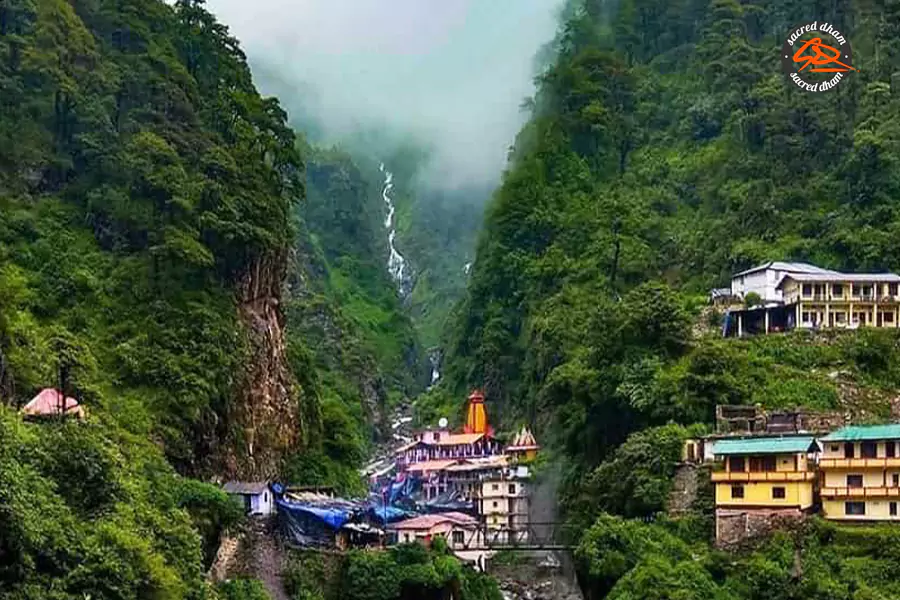
Yamunotri Temple
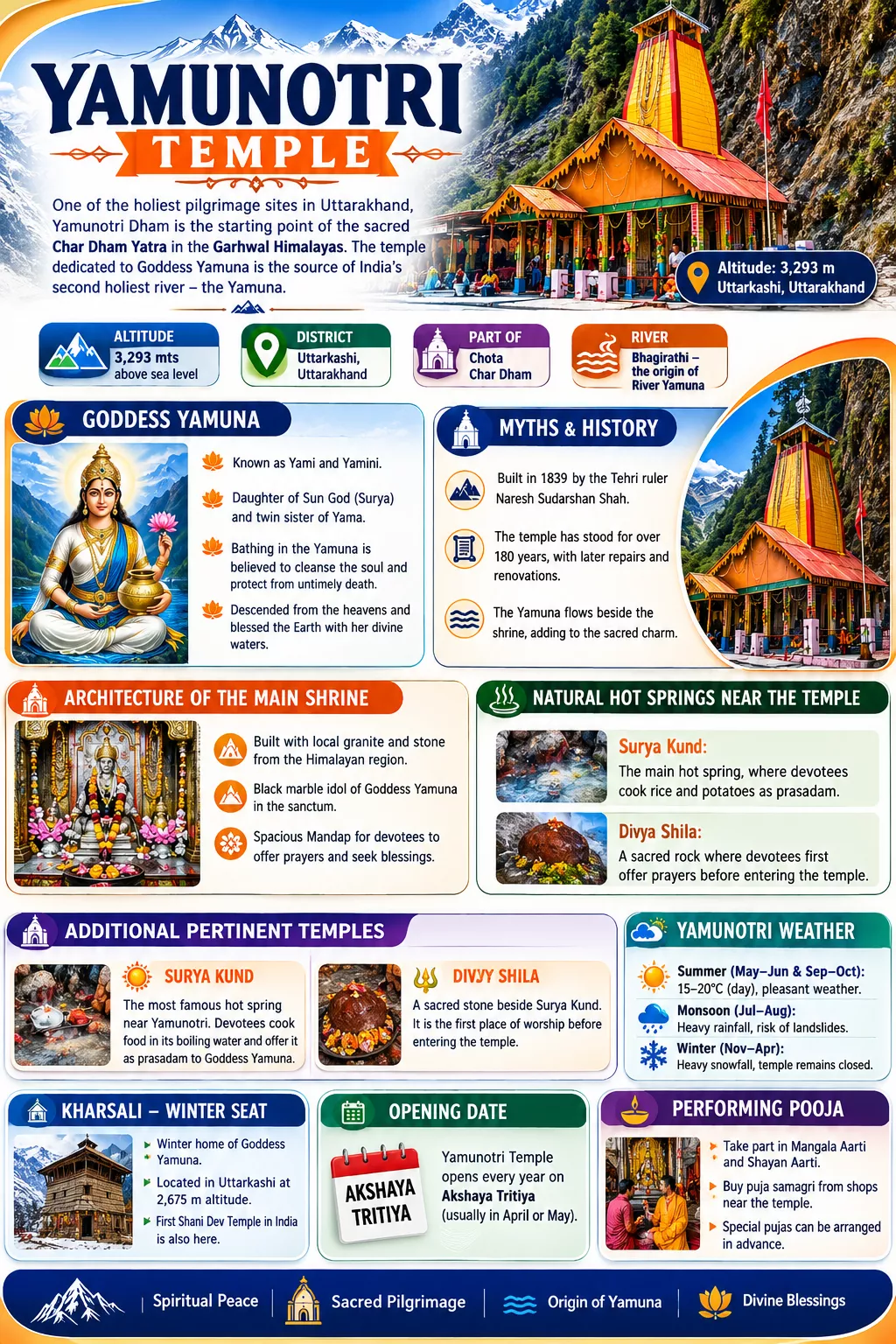
Yamunotri Dham is one of the holiest pilgrimage destinations in Uttarakhand and marks the starting point of the Char Dham Yatra. Dedicated to Goddess Yamuna, the temple stands amidst the majestic Garhwal Himalayas in the Uttarkashi district. Snow-covered peaks, dense forests, hot springs, and the sacred Yamuna River surround this revered shrine, creating a peaceful atmosphere for pilgrims and nature lovers alike.
As the source of the Yamuna River, Yamunotri holds immense religious importance in Hinduism. The temple is also one of the four sacred shrines of the Chota Char Dham Yatra. Every year, thousands of devotees visit this holy place to seek the blessings of Goddess Yamuna, whom Hindus worship as the goddess of purity and life.
Goddess Yamuna
According to Hindu beliefs, Goddess Yamuna is the divine form of the sacred Yamuna River. Ancient scriptures also mention her as Yami, the twin sister of Lord Yama, the God of Death, and the daughter of Surya Dev, the Sun God. Because of this divine relationship, devotees believe that bathing in the holy waters of the Yamuna helps cleanse the soul and protects them from untimely death.
Several legends describe the descent of Goddess Yamuna from the heavens to the Himalayas. Since she first flowed from the slopes of Mount Kalinda, devotees also worship her by the name Kalindi. Even today, pilgrims offer prayers to Goddess Yamuna before beginning their Char Dham Yatra.
Myths and History of Yamunotri Temple
The present Yamunotri Temple dates back to 1839, when Maharaja Sudarshan Shah of Tehri Garhwal built the shrine. Over the years, natural calamities damaged the temple several times, and later rulers restored it while preserving its religious significance.
The temple stands beside the flowing Yamuna River and houses the sacred idol of Goddess Yamuna. Surrounded by the Himalayas, the shrine has remained one of the most important pilgrimage destinations for devotees seeking spiritual peace and the blessings of the river goddess.
Architecture of the Main Shrine of the Yamunotri Temple
The Yamunotri Temple reflects the simplicity and beauty of traditional Himalayan architecture. Builders used locally available granite and stone to construct the temple, allowing it to blend naturally with the surrounding mountains. The beautifully designed entrance opens into a spacious prayer hall that leads to the sacred Garbha Griha.
Inside the sanctum, devotees worship the black marble idol of Goddess Yamuna, beautifully decorated with flowers and traditional ornaments. Pilgrims gather in the Mandap to offer prayers, attend aartis, and seek the blessings of the goddess before entering the sanctum.
Just outside the temple, several natural hot water springs flow throughout the year. Of all these sacred springs, Surya Kund is regarded as the holiest by devotees. Before offering prayers inside the temple, pilgrims first worship the sacred Divya Shila located beside the hot spring. Many also cook rice and potatoes in the naturally boiling water as prasadam, which they later offer to the goddess before taking it home.
Additional Pertinent Temples
Surya Kund (The Pond of the Sun)
Surya Kund is the most famous hot water spring near Yamunotri Temple. The naturally boiling water allows devotees to cook rice and potatoes wrapped in a cloth, which they later offer to Goddess Yamuna as sacred prasadam. The spring also reminds devotees of Surya Dev, the father of Goddess Yamuna.
Divya Shila (The Sacred Stone)
Located beside Surya Kund, Divya Shila is one of the most sacred places in Yamunotri. According to tradition, devotees first offer prayers at this holy rock before entering the temple for the darshan of Goddess Yamuna. Hindu scriptures regard this ritual as an important part of the pilgrimage.
Yamunotri Weather: The Best Time to Visit Yamunotri
The best time to visit Yamunotri Temple is from May to June and again from September to October. During these months, the weather remains pleasant, making the journey comfortable for pilgrims. Daytime temperatures generally range between 15°C and 20°C, while nights can be much cooler because of the high altitude.
The monsoon season, usually from late July to August, brings heavy rainfall and increases the risk of landslides along the mountain roads. Pilgrims should avoid travelling during this period whenever possible.
Winter begins in November and continues until April. Heavy snowfall covers the region, temperatures often fall below freezing, and the temple remains closed. Pilgrims planning the Yamunotri Yatra should choose the summer or post-monsoon season for a safer and more enjoyable journey.
Kharsali: Winter Seat of Yamunotri
Kharsali Village, located in the Uttarkashi district at an altitude of about 2,675 metres, serves as the winter home of Goddess Yamuna. Every year, after the Yamunotri Temple closes for the winter, priests ceremonially carry the idol of the goddess to Kharsali, where devotees continue offering prayers until the next pilgrimage season.
Kharsali is also famous for the ancient Shani Dev Temple, one of the oldest temples dedicated to Lord Shani in Uttarakhand. According to local tradition, pilgrims seek the blessings of Lord Shani before beginning their visit to Yamunotri. The temple’s unique stone and wooden construction reflects the traditional Himalayan style and adds to the spiritual importance of the village.
On Bhai Dooj, shortly after Diwali, priests bring the idol of Goddess Yamuna to Kharsali in a grand religious procession. The goddess remains here throughout the winter before returning to Yamunotri on Akshaya Tritiya.
Opening Date of Yamunotri Temple
Every year, Yamunotri Temple opens on the auspicious occasion of Akshaya Tritiya, which usually falls in April or May according to the Hindu calendar. Thousands of devotees gather to witness the opening ceremony and seek the blessings of Goddess Yamuna at the beginning of the Char Dham pilgrimage season.
Performing Pooja at Yamunotri Temple
Devotees can participate in several rituals and pujas at Yamunotri Temple throughout the day. The most popular ceremonies include the Mangala Aarti in the morning and the Shayan Aarti in the evening.
Pilgrims can purchase the required puja samagri from shops near the temple before offering prayers. The temple priests perform various rituals on behalf of devotees, including offerings of flowers, fruits, and traditional worship items. Those wishing to perform special pujas should make arrangements before reaching the temple during the busy pilgrimage season.
The Temple Location and How to Reach Yamunotri Dham?
Yamunotri Dham is located in the Uttarkashi district of Uttarakhand and is well connected with major towns through road transport. Pilgrims complete the final stretch of the journey on foot after reaching Janki Chatti.
1.) By Air
The nearest airport is Jolly Grant Airport, Dehradun. From the airport, travellers can continue by taxi or bus towards Barkot and Janki Chatti before beginning the trek to Yamunotri. Helicopter services are also available during the pilgrimage season through authorised operators on selected routes.
2.) By Train
Haridwar and Rishikesh serve as the nearest railway stations for Yamunotri. Both stations connect with several major cities across India. After arriving, pilgrims can hire taxis, shared jeeps, or buses for Barkot and Janki Chatti.
3.) By Road and Trek
Motorable roads connect Dehradun, Haridwar, Rishikesh, Barkot, and Janki Chatti with Yamunotri. From Janki Chatti, pilgrims undertake an approximately 5 km trek to the temple. Pony, palki, and pithu services are also available for elderly devotees and those who need assistance.
Festivals Celebrated at Yamunotri
Several festivals make the pilgrimage to Yamunotri Dham even more meaningful for devotees.
Basant Panchami: Special religious ceremonies take place on this auspicious day, and many devotees wear yellow clothes while participating in the celebrations.
Phool Dei: This traditional festival welcomes the arrival of spring. Local families decorate their homes with flowers, prepare traditional sweets, and celebrate with folk songs and cultural programmes.
Olgia: Also known as Ghee Sankranti, this festival takes place during August to celebrate the agricultural season. Local communities observe the occasion with traditional food, cultural customs, and devotional activities.
Travel Destinations Near Yamunotri Dham
Several beautiful destinations around Yamunotri Dham allow pilgrims to enjoy both spirituality and the natural beauty of the Garhwal Himalayas.
Hanuman Chatti: Located at the meeting point of the Hanuman Ganga and Yamuna Rivers, Hanuman Chatti serves as an important stop for pilgrims. It also marks the starting point for the popular Dodital Trek.
Saptarishi Kund: Situated about 10 km from Yamunotri Temple, this high-altitude lake is regarded as the origin of the Yamuna River. Surrounded by rugged mountains, the lake is also famous for the rare Brahma Kamal flowers found in the region.
Harsil: Known for its snow-covered mountains, pine forests, and apple orchards, Harsil offers a peaceful escape for travellers visiting the Char Dham region. Many visitors include Harsil in their itinerary because of its natural beauty and pleasant climate.
Gangotri: Located a few hours from Yamunotri, Gangotri Dham is another sacred shrine of the Char Dham Yatra. Pilgrims often combine both destinations while exploring the spiritual heritage of Uttarakhand.